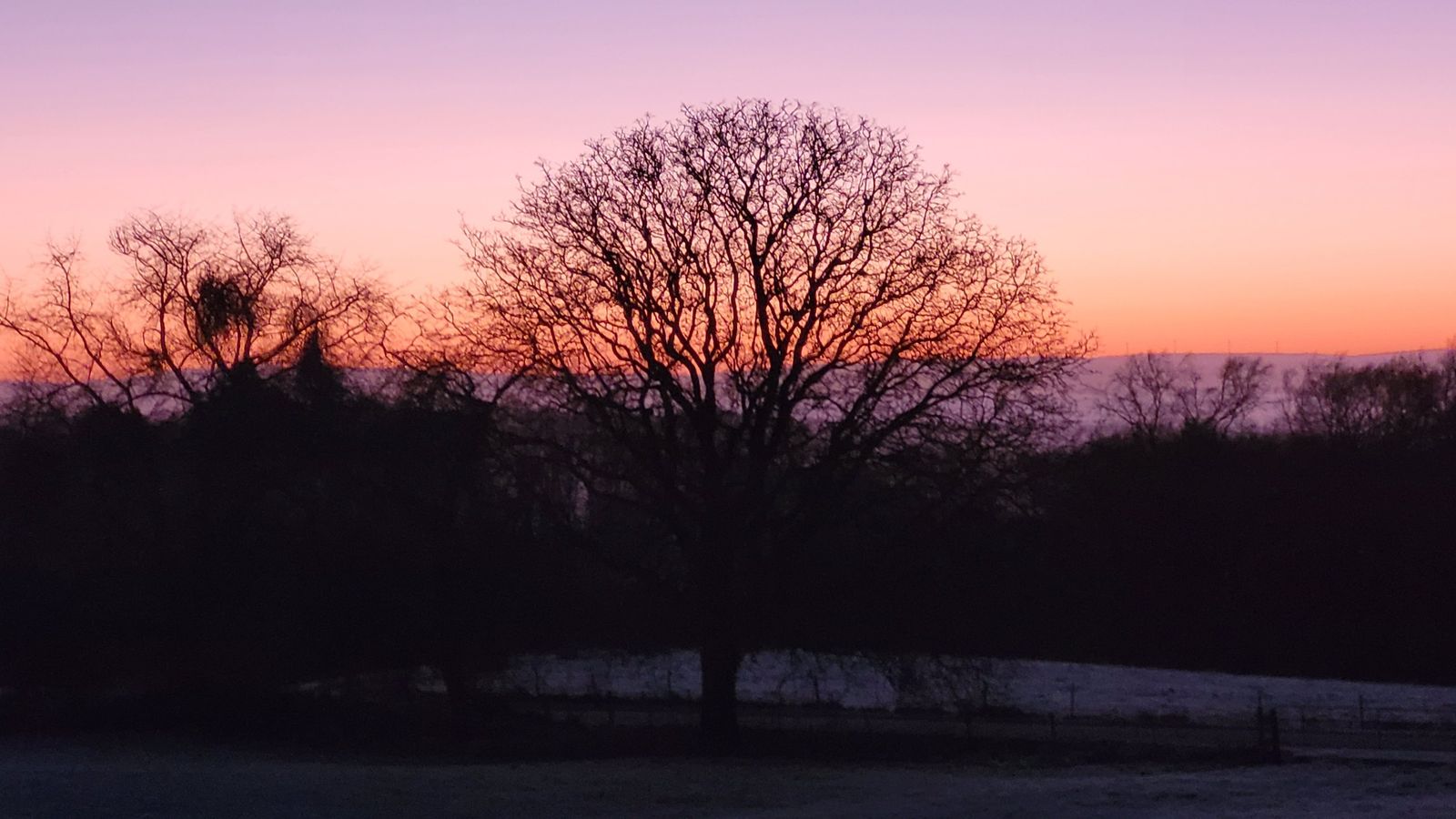
The right moment decides wound closure, regrowth and yield – and in Luxembourg also whether the pruning is allowed at all. Here is the overview for the year, with the reasoning below.
The wave shows the tree's annual rhythm – dormancy in winter at the bottom, full leaf in summer at the top. The numbers sit at the ideal moment of each measure; the possible windows are in the texts below. Tree inspection (15) runs all year, ideally once in leaf and once bare.
Guide values for Luxembourg. Site, weather and the tree's condition can shift the best moment – when in doubt, we settle it at the on-site visit.
For nine out of ten trees, it's not the calendar that decides the pruning, but the goal: should the tree grow, or settle down? Should it stay smaller, stand safer, bear more, live longer? Only once that is clear does the timing follow – and often also the insight that no pruning, or much less, is the right answer.
And one thing up front: a hard reduction never produces a healthier, safer or "tidier" tree – clearly the opposite. The tree answers the loss with a forest of thin, poorly attached shoots that within a few years create more foliage, more deadwood and more risk of breakage than the crown before. The big wounds rot in, the tree lives shorter. If you want a smaller tree, you need regular, moderate care over years – not a one-off clear-cut. The rule of thumb: never more than about 30 per cent of the crown at once. Larger reductions I split over two to three years – first the height, then the sides, or the other way round.
With pome fruit there is no such thing as the right moment – it depends on what the pruning is meant to achieve:
Winter pruning invigorates. The harder the cut during dormancy, the stronger the tree shoots in spring. That's wanted on young trees being formed and on declining, senile trees that are to build a crown once more. But a hard winter pruning belongs strictly at the end of winter (February/March): apple and pear compartmentalise poorly, and only if the sap rises soon afterwards can the tree close the wounds quickly. Big wounds cut in December stand open for months.
Summer pruning calms. Removing foliage takes energy from the tree – it reacts with fewer water sprouts, and what was cut doesn't just grow straight back. That's the pruning for trees that are too vigorous or getting too big: for most homeowners whose tree is outgrowing them, late-winter to late-spring pruning or summer pruning is the better recommendation than the classic December cut. Light thinning works all winter, but not in frost below about −5 °C.
Young fruit trees get their crown in spring, towards budburst – then the tree answers every cut immediately with directed growth. In the Öschberg/Palmer system, the central leader and three to four scaffolds are set and tied flat: the basis of a light-filled, load-bearing crown that lasts a tree's lifetime. The first years decide – what is missed here has to be corrected later, expensively, with big cuts.
Stone fruit is pruned after the harvest, July to September. In winter the wounds close poorly and fungi like Monilia or bacteria (Pseudomonas) get in – the dreaded gummosis is often the result of a winter pruning. Sweet cherries best during or right after the harvest.
Shrubs and trees that flower on last year's wood are pruned right after flowering – for ornamental cherries that means April/May. Prune in winter and you cut away the blossom; prune in summer and you take next year's buds.
Walnut is pruned after the harvest in October – as rarely as possible and only with small cuts. In spring and early summer it "bleeds" heavily, and it compartmentalises big wounds poorly.
Maple, birch, hornbeam and grapevine have high sap pressure in spring, pushing water out of every wound. So they are pruned in late summer (August/September), when the sap flow eases and the plant still has time to seal the wound before winter.
Technically, broadleaves can be pruned almost all year, with two exceptions: not during budburst in April/May, when the tree puts all its reserves into the leaves, and not in hard frost. The best time for larger interventions is October to February – outside the protection period, with a good view into the bare crown. Deadwood removal and crown maintenance are also possible in summer, after a species protection check.
For thinning the crown, summer is actually the best time. Only on a tree in leaf can you see where the crown is really dense, how the light falls and what is dead – in winter it's guesswork. And summer pruning calms: the tree doesn't answer the removal with a forest of new shoots, and the wounds close faster. The precondition remains the check for nests and roosts before pruning.
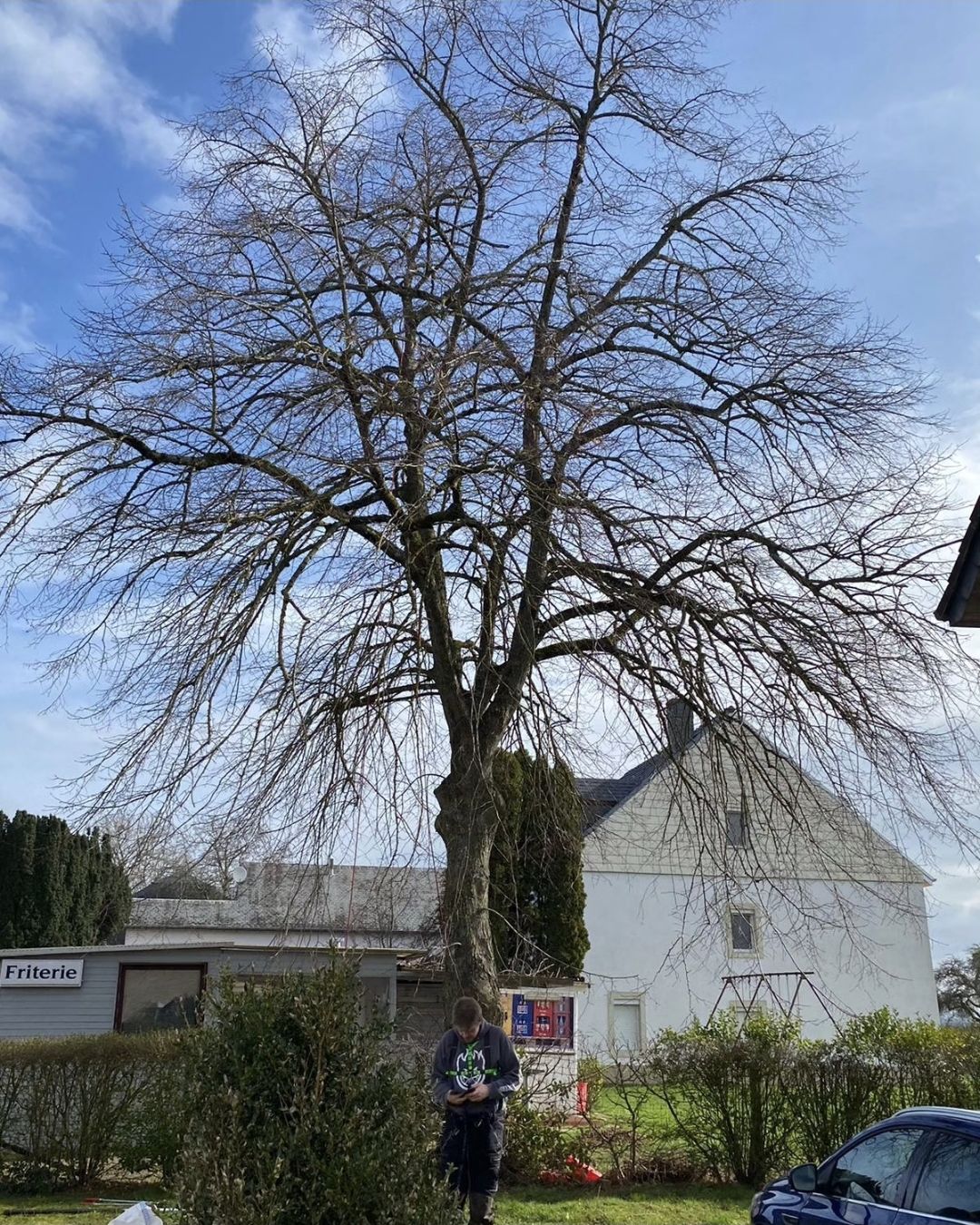
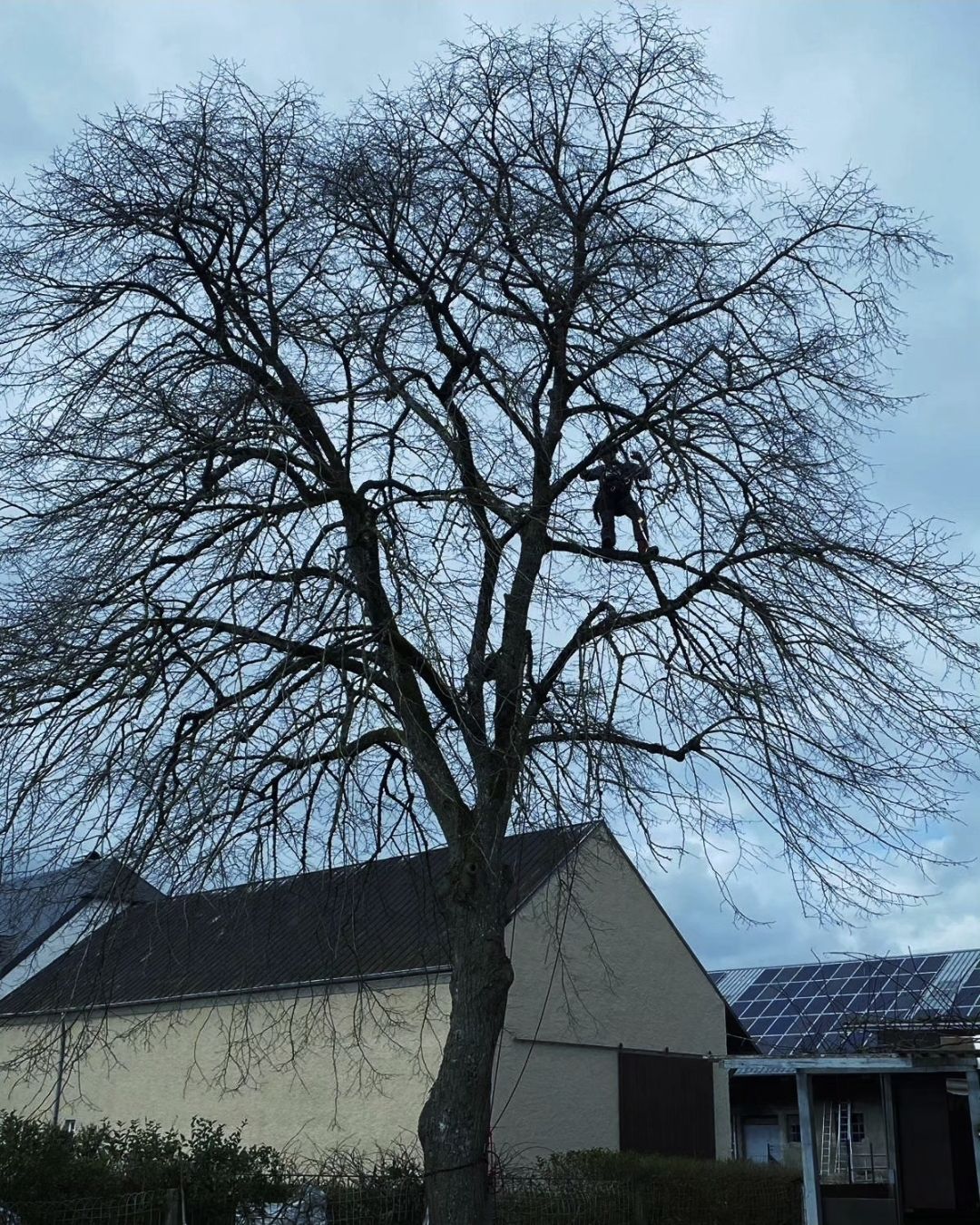
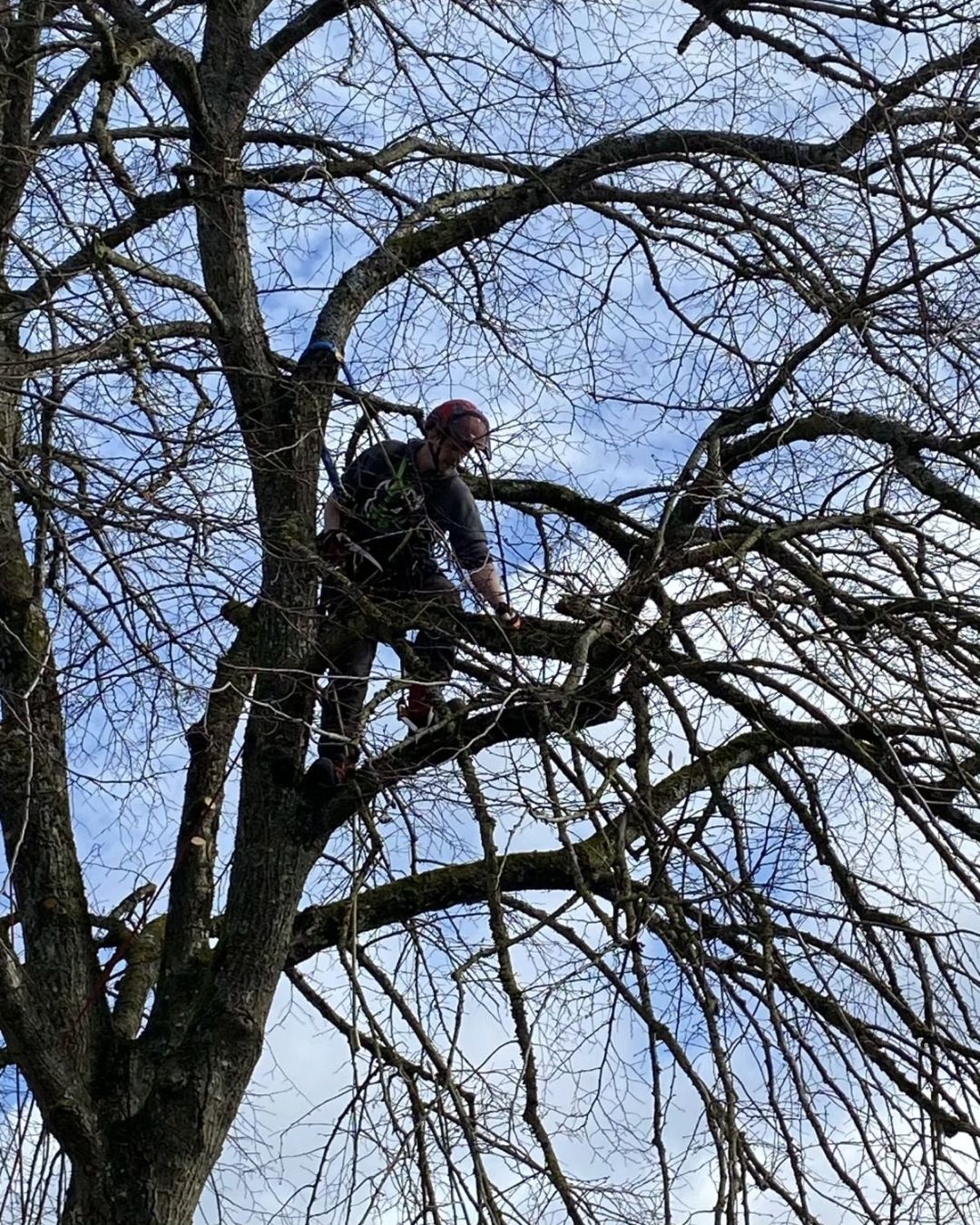
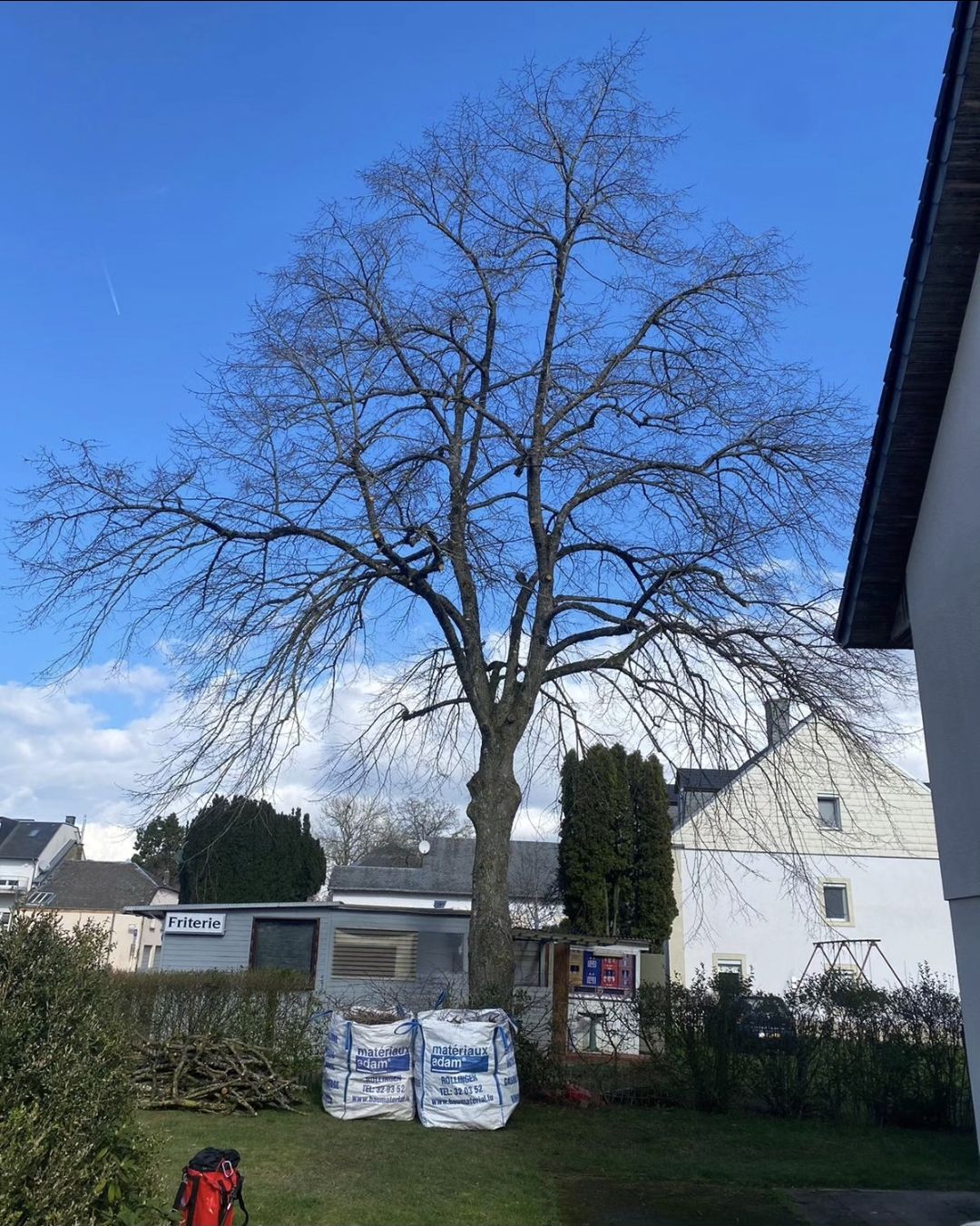
Conifers don't resprout from old wood – every cut into old wood stays bare. Necessary interventions (deadwood, reduction, crown lifting) in autumn or early spring, never during the protection period. Shape trimming of hedges (yew, thuja) in June and again in late summer.
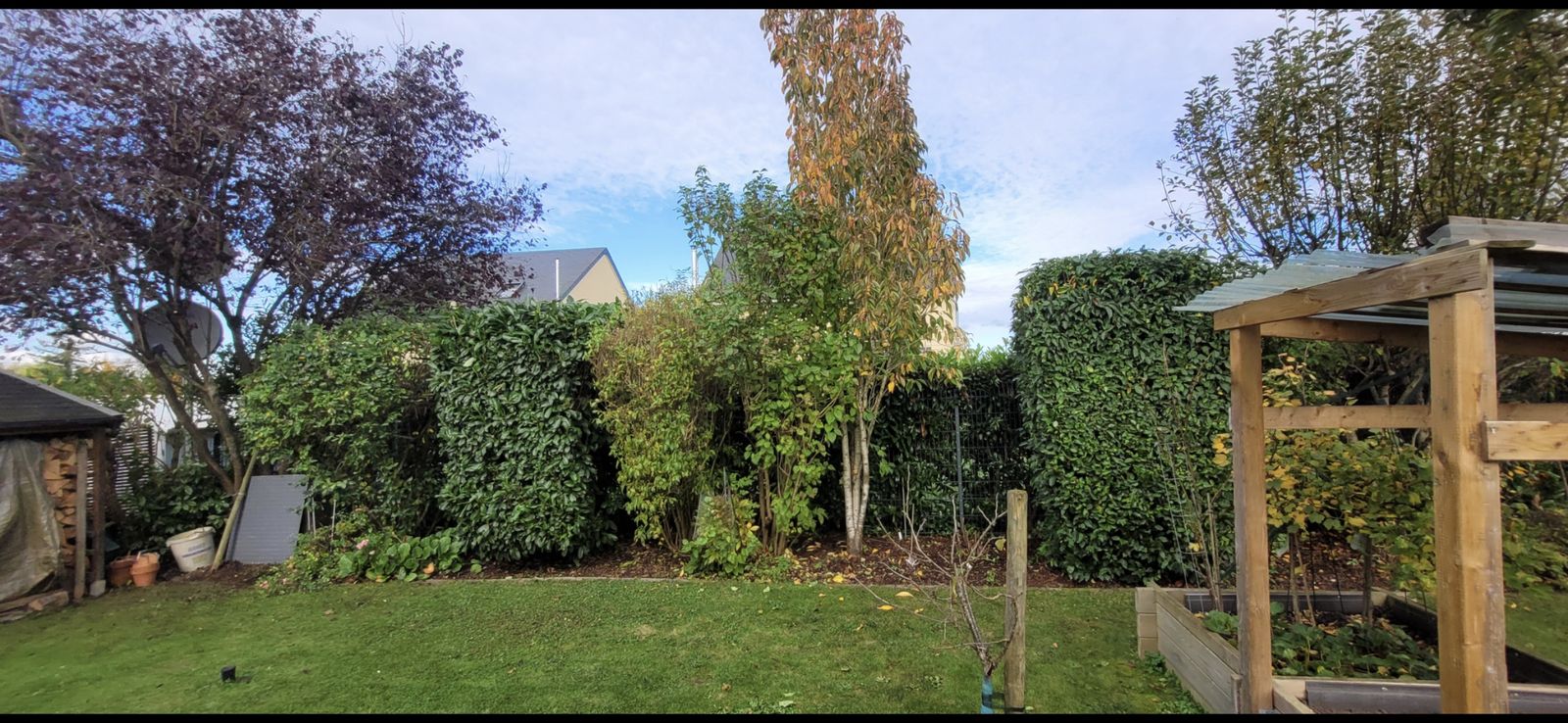
Here too, the goal decides. The shape trim, which only takes the year's growth, is right for garden hedges in June and once more in late summer – after checking for occupied nests. A hard cut-back, where the hedge is taken back 30 centimetres, a metre or more, is something else entirely: it belongs in late winter (February/March), so the plant shoots right afterwards and closes the big wounds. Outside the protection period it is also possible in October/November, but then the wounds stand open all winter. For some species that compartmentalise poorly, a hard cut-back is actually only advisable in summer; common lilac (Syringa vulgaris), on the other hand, takes the late-winter cut well. Free-growing field hedges and orchard margins clearly fall under the protection period.
Mixed hedges: the species decides, not the calendar. Many gardens have hedges of five or six different shrubs – and they cope very differently with the same cut on the same day. A cherry laurel (Prunus laurocerasus) shrugs off a vigorous cut-back at almost any time; a witch hazel (Hamamelis) next to it compartmentalises poorly, hardly resprouts from old wood and is best not cut at all, or only minimally after flowering. Whoever brings the hedge "into line in one go" will have gaps in three years where the sensitive species stood. That's why I look at every species in the hedge before cutting – that's the difference between a healthy hedge and a ruined one.
Normally from October to February. Advantages: no protection period, no foliage, frozen ground spares the lawn. And if a tree has to go, then best in deep dormancy – when it notices least. During the protection period only as a danger or emergency felling with the forester's authorisation (see above). In many municipalities, felling also needs a communal permit – I clarify that in advance.
Bare-root fruit trees and hedge plants from October to March, during dormancy – autumn is preferable to spring because the tree already grows roots before budburst. Root-balled and container plants work almost all year but need plenty of water in summer.
Worthwhile all year, but ideally twice: once in leaf (vitality, deadwood, crown shape) and once bare (branch attachments, cracks, fungal fruiting bodies in autumn). After storms and before winter, a look at trees along roads, paths and buildings pays off.