The old tree is the most valuable one
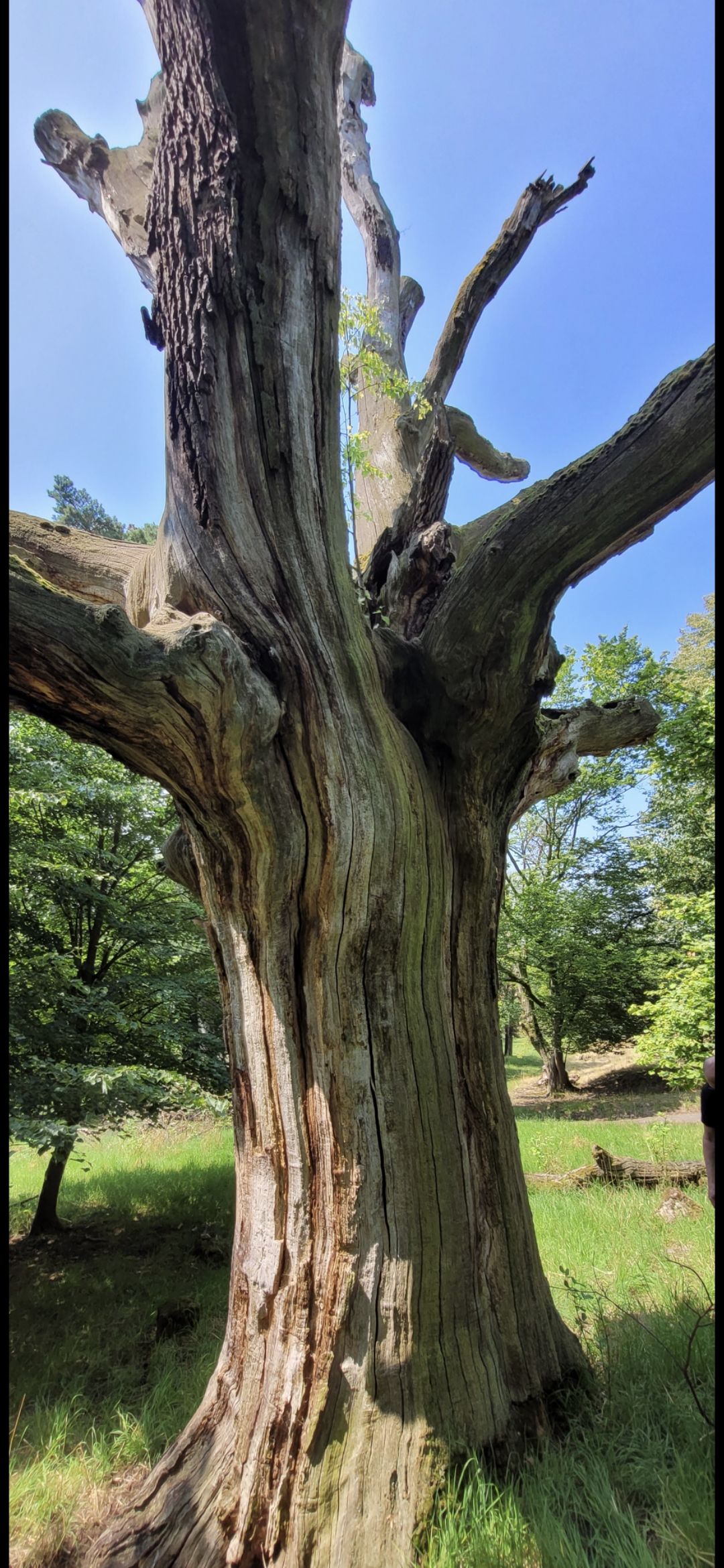
Cavities, cracks, deadwood, fungal brackets, flaking bark: what counts as a defect from a safety point of view is a home from the point of view of bats, woodpeckers, hornets and deadwood beetles. Good tree care weighs both – and usually finds a way to keep the tree.
- Habitat tree management
- Preserving old trees with cavities and deadwood through retrenchment pruning or cordoning off instead of felling. Marking and documenting habitat trees in stands.
- Deadwood concepts
- Deliberately leaving standing deadwood (high stumps) and lying deadwood – where it endangers nobody. A felling job becomes a biotope.
- Species protection during tree work
- Checking for nests, cavities and bat roosts before any intervention. Compliance with the protection periods and the legal requirements of Luxembourg's nature protection law.
- Benjes hedges from cuttings
- Branches and brushwood become a layered hedge along the edge of the property: stacked neatly between stakes, tidy to look at – and shelter for birds, hedgehogs and insects. The cuttings become the solution instead of a waste problem: no hauling away, no container, but new habitat.
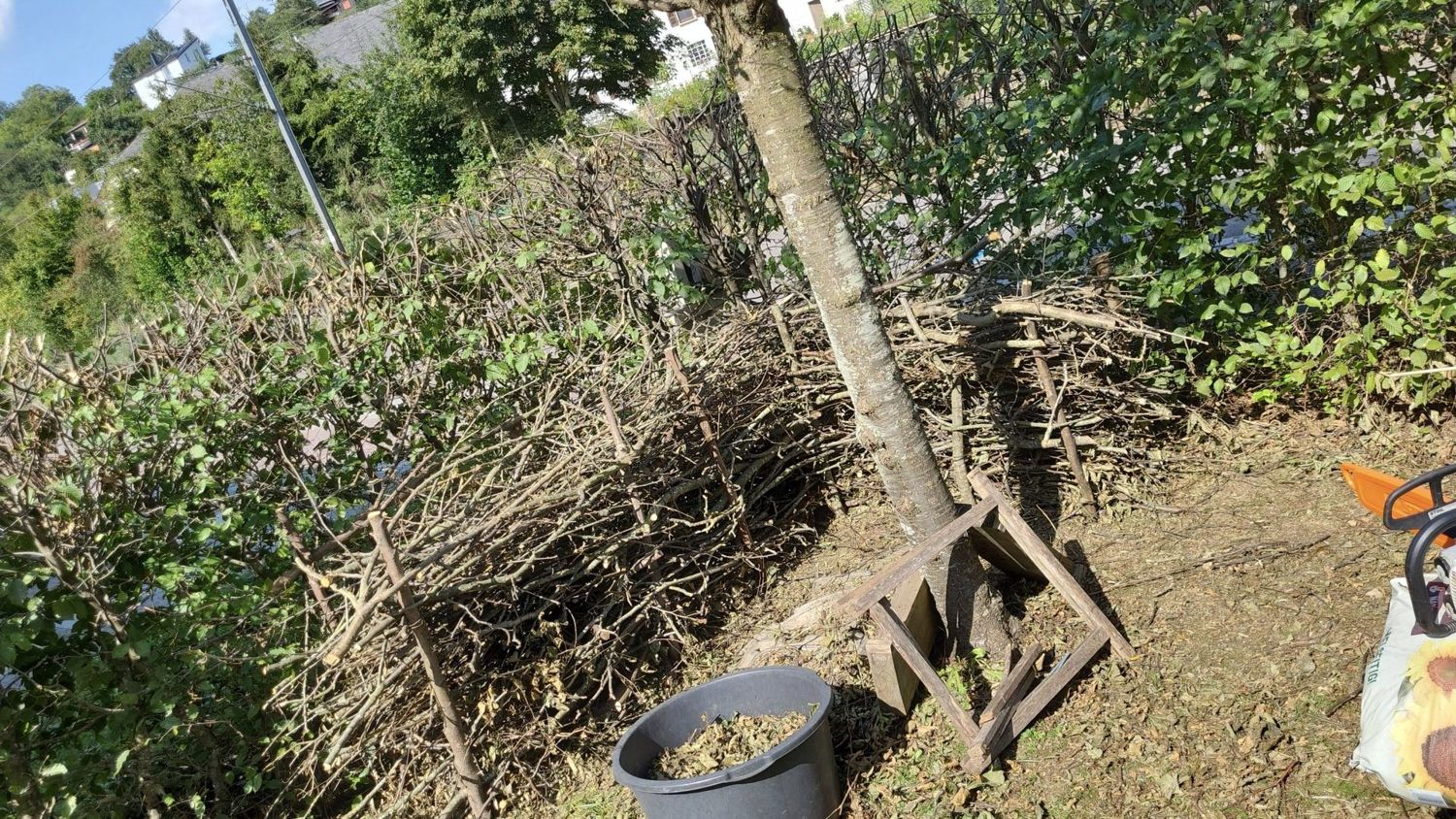 Built up between stakes
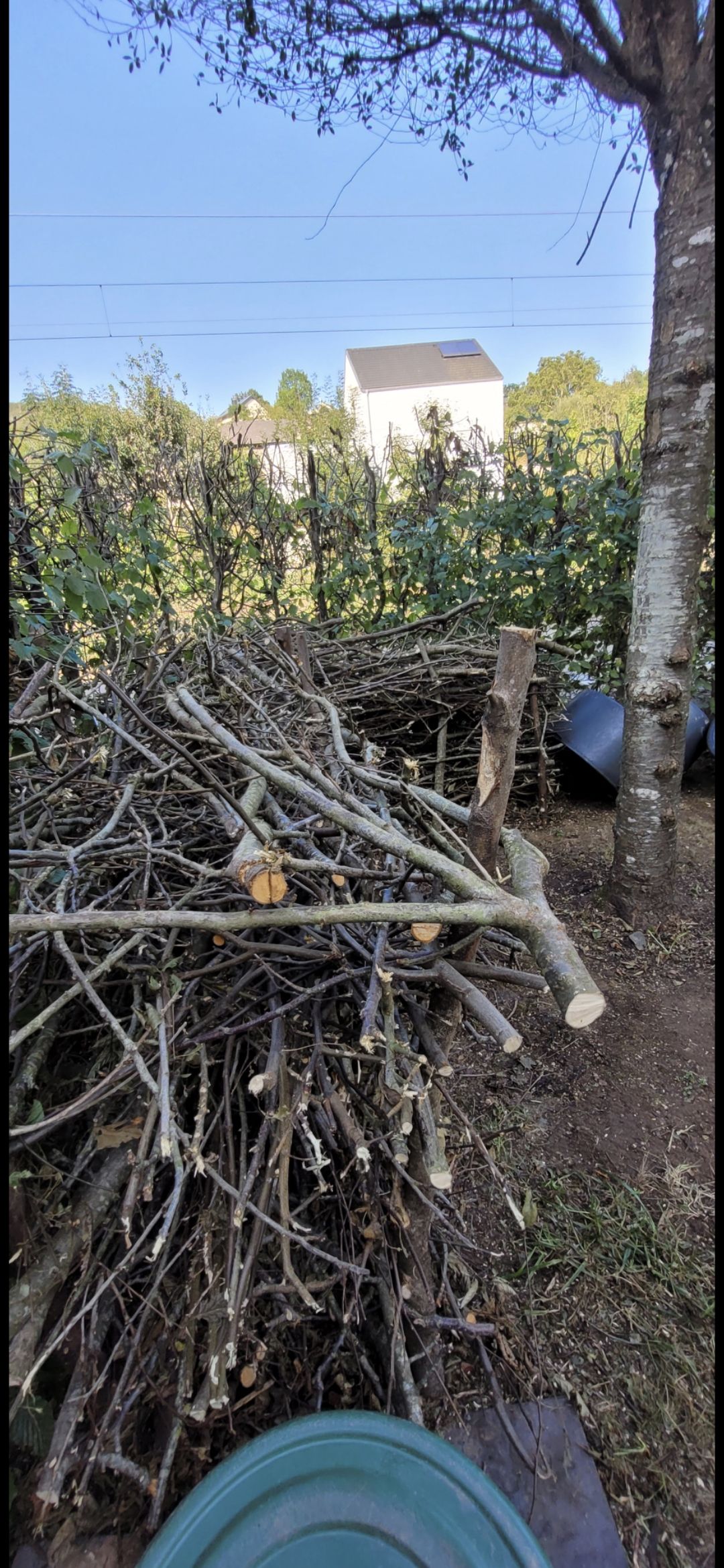 Neatly layered
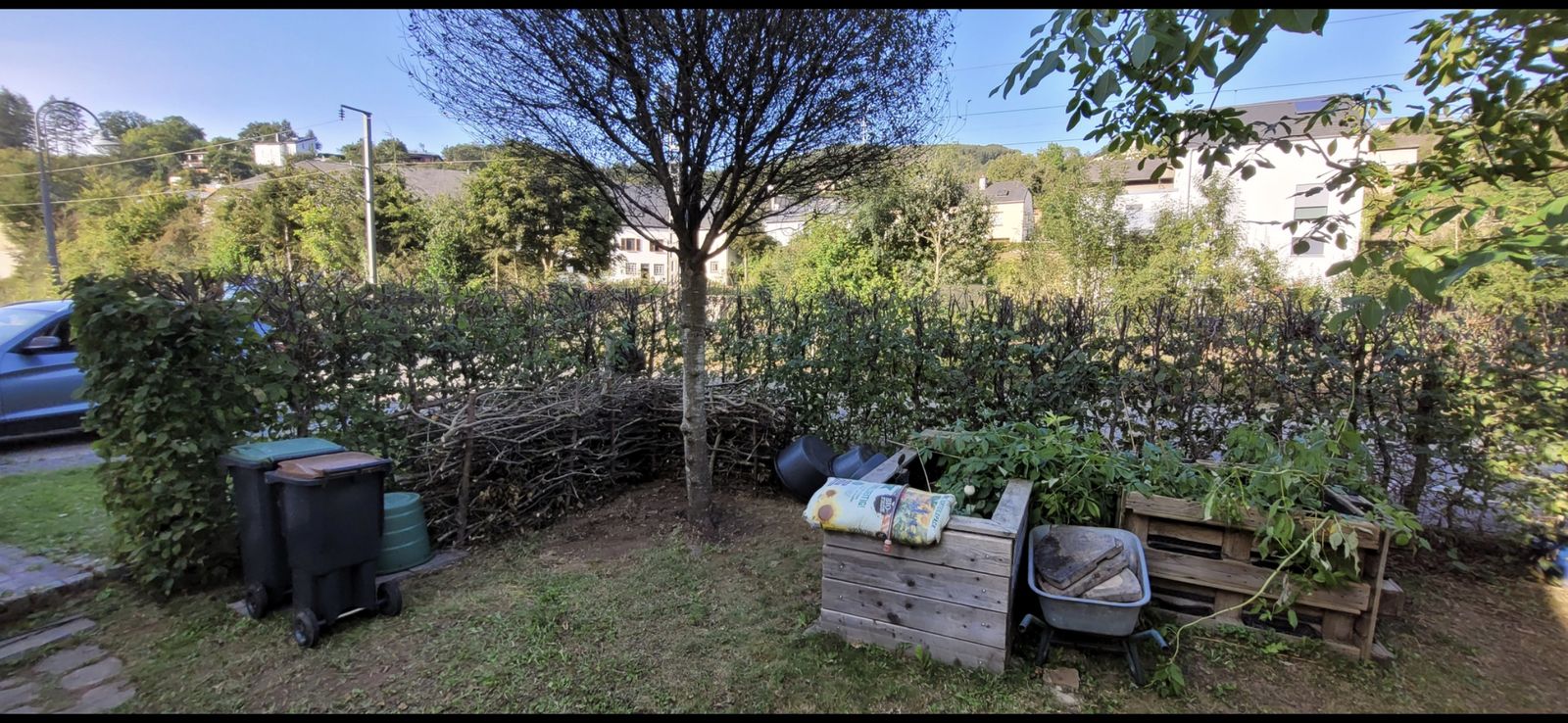 Finished – and inhabited
- Nesting boxes and roosts
- Installing nesting boxes for birds, bat boxes and insect shelters – professionally, by rope, at the right height and orientation.
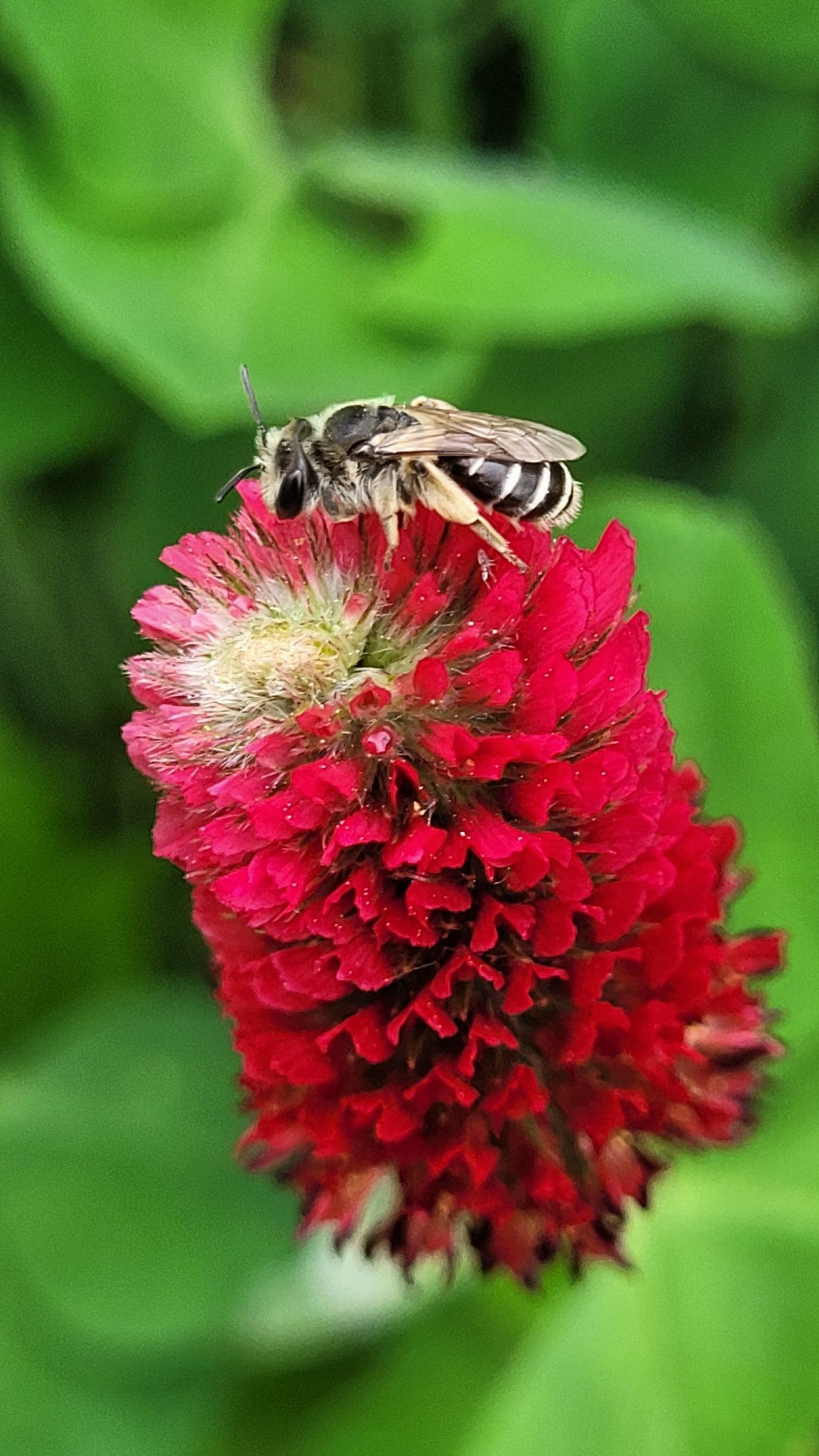
- Wildflower strips and margins
- Sowing regional seed along orchards, path edges and garden borders – food for wild bees and butterflies, cover for insects and small animals.
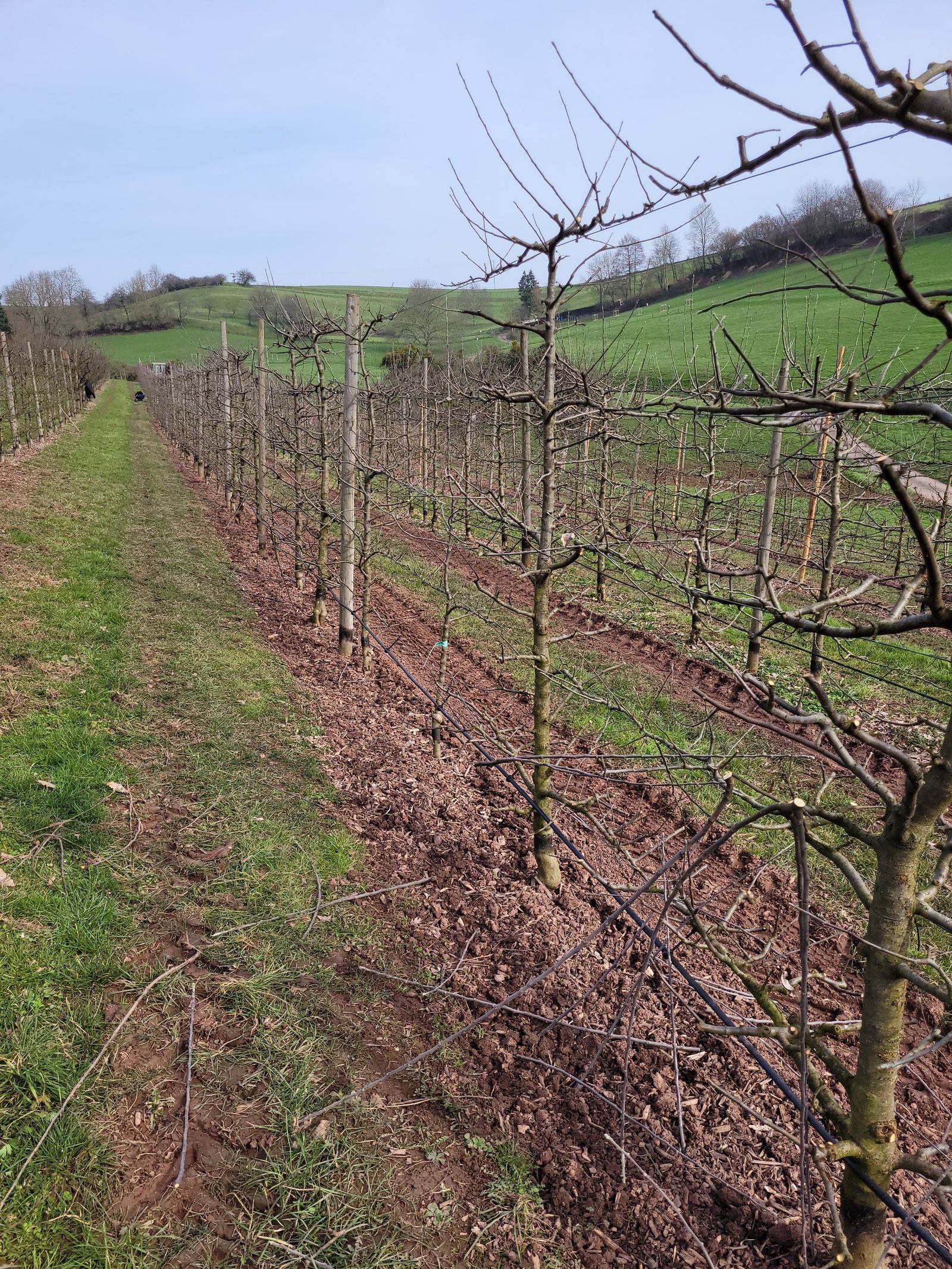
- Near-natural planting
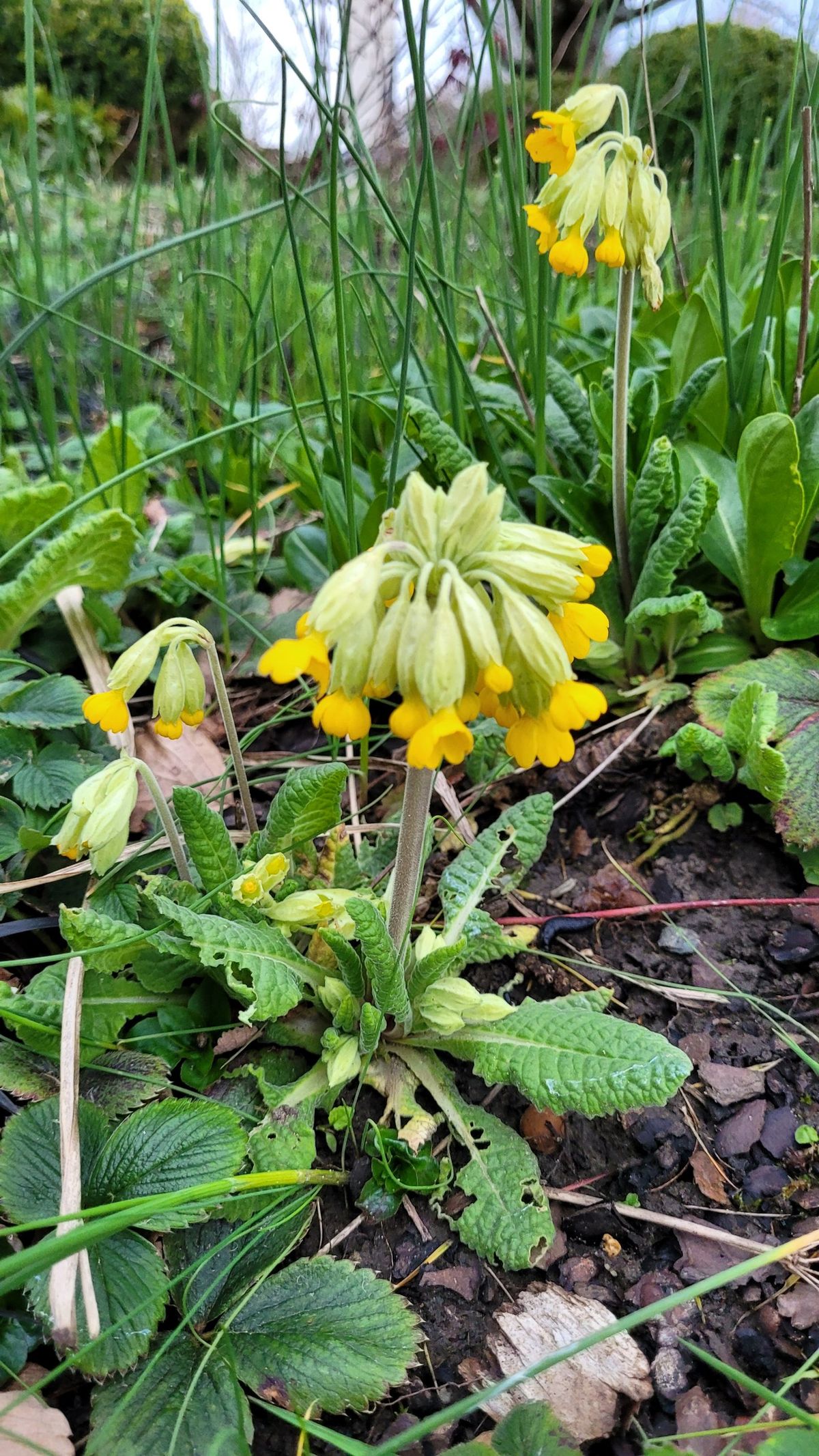
- Site-appropriate native trees and shrubs and old fruit varieties, planted with the next generations in mind, not the next season.
Saving old Luxembourg varieties – and bringing them back to the garden
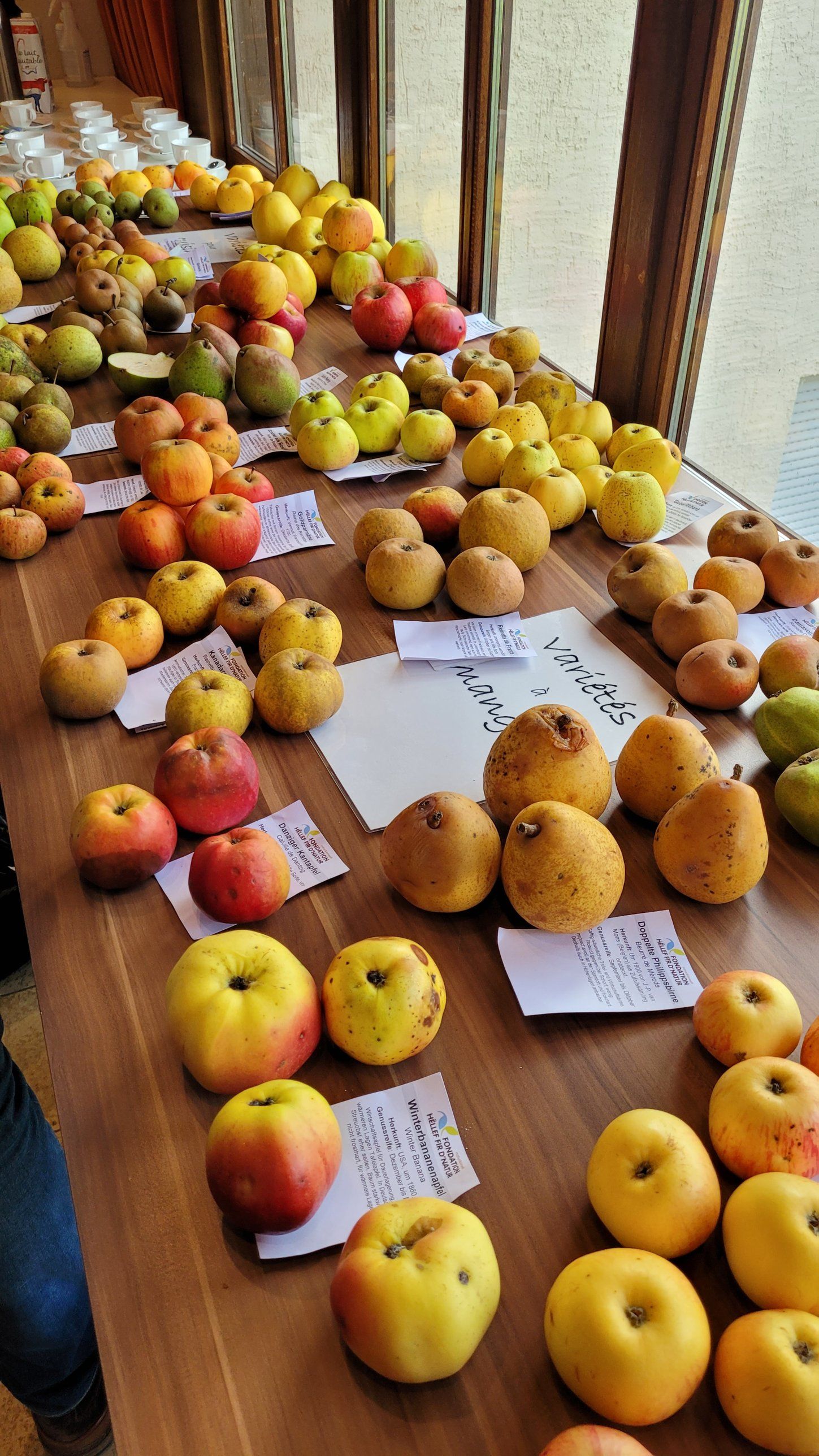
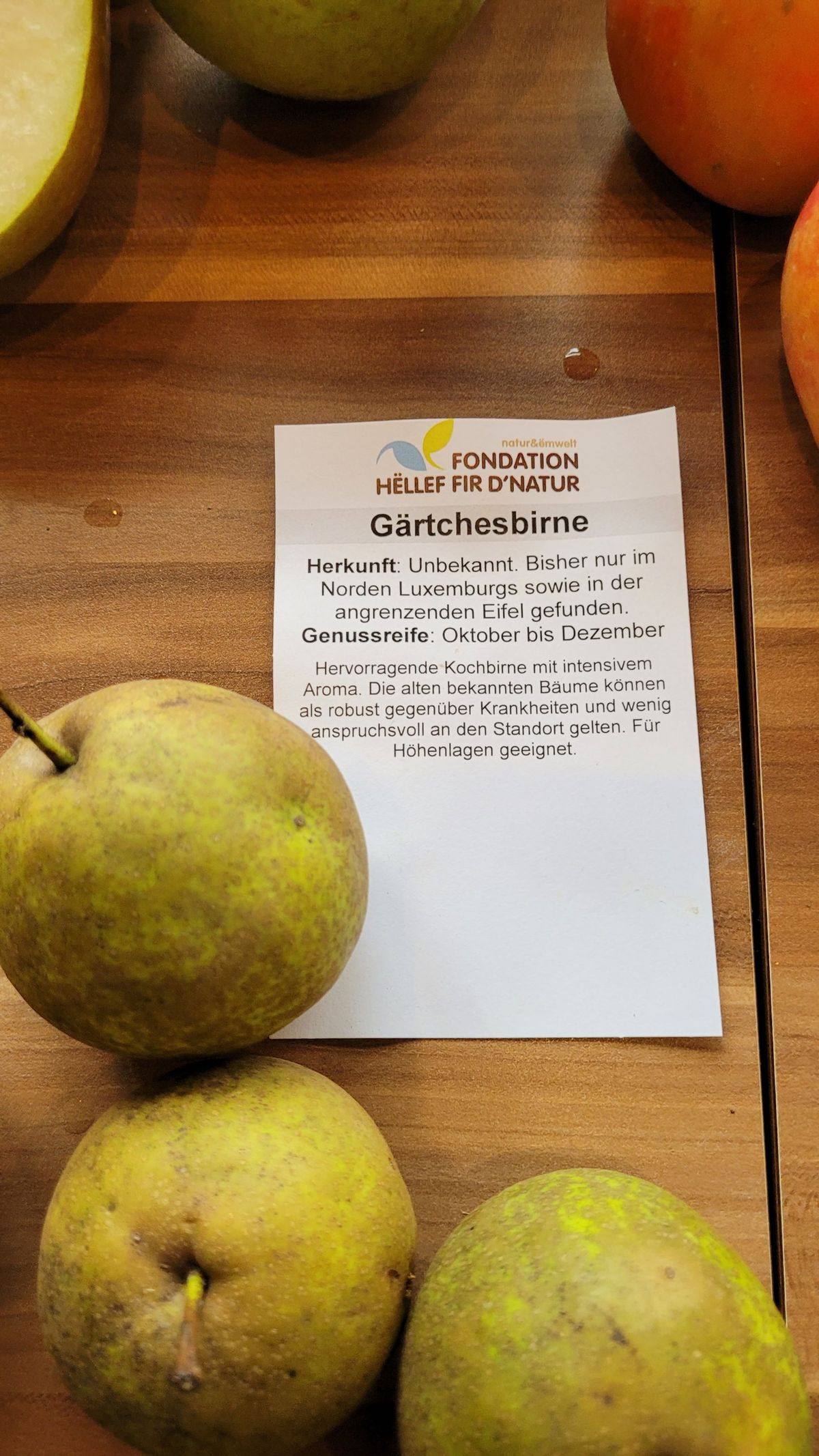
Luxembourg was once fruit country. The book "Luxemburgs Birnen und Äpfel" records that at times the country exported around 100,000 tonnes of fruit a year – mostly perry pears and apples from the orchards. Today, what Luxembourg itself produces in fruit is barely a drop in the ocean. Our fruit comes from plantations that have grown so large they can no longer be farmed without crop protection products of every kind. The point is not to demonise these markets – but to relieve them. Every tree in your own garden takes a little pressure out of them and gives the big players the chance to take a step back towards the ecological themselves. It's the same principle as the retrenchment pruning of the old walnut: only once the load is off can a system recover. And the old varieties are still standing: in ageing orchards, on dying standards, often in one single tree.
When I come across such a tree during an inspection, that doesn't have to be the end of the variety. In winter I cut scions and graft them – onto vigorous rootstocks for the next orchard, or onto dwarfing rootstocks for the home garden. The standard that hardly anyone can maintain any more becomes a small tree of 1.80 to 2 metres that fits in three by three metres, can be harvested and cared for from the ground, and still bears the same fruit that has grown here for a hundred years – robust, used to our climate, and in your own garden entirely without spraying. Not every old variety behaves the same on a small rootstock – which rootstock and which form suit which variety and site is part of the planning.
Future planting projects
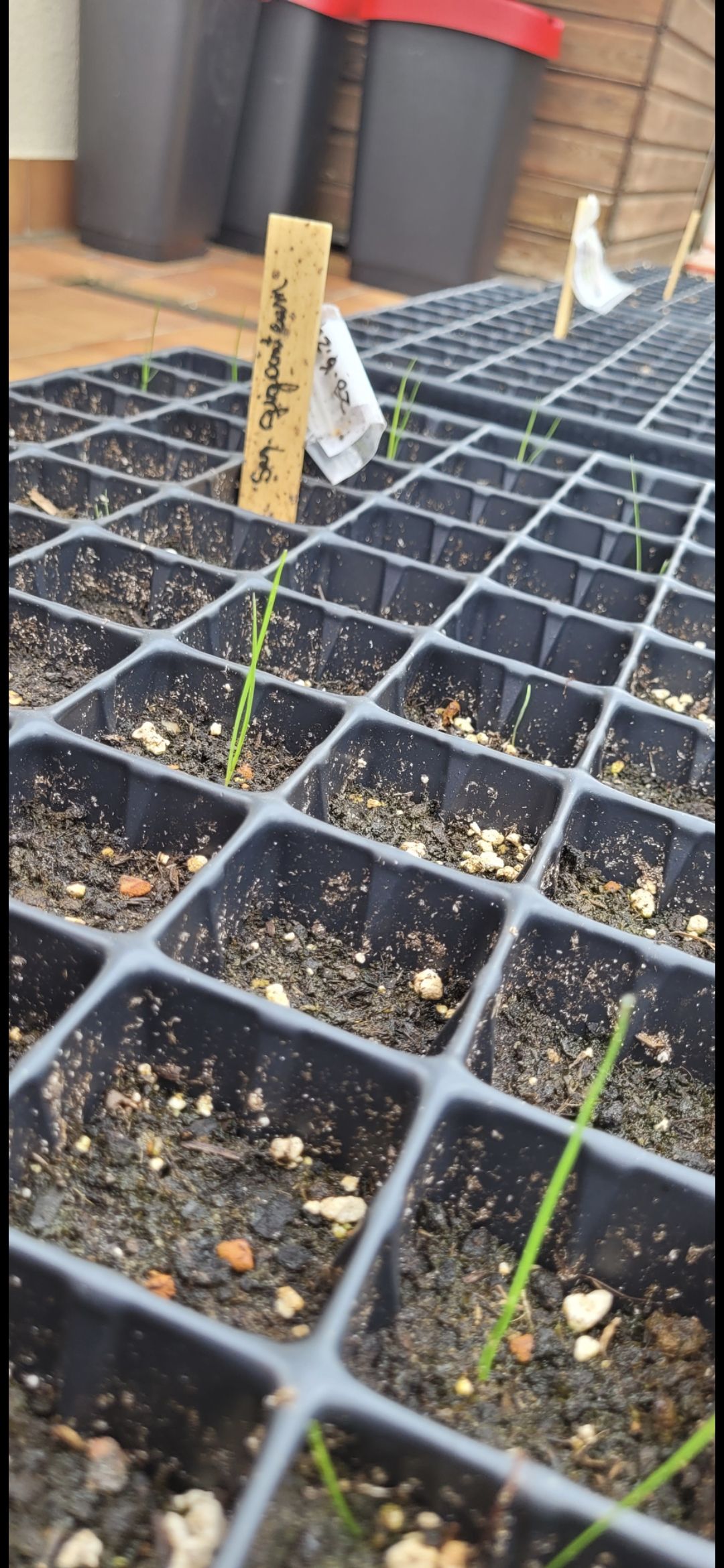
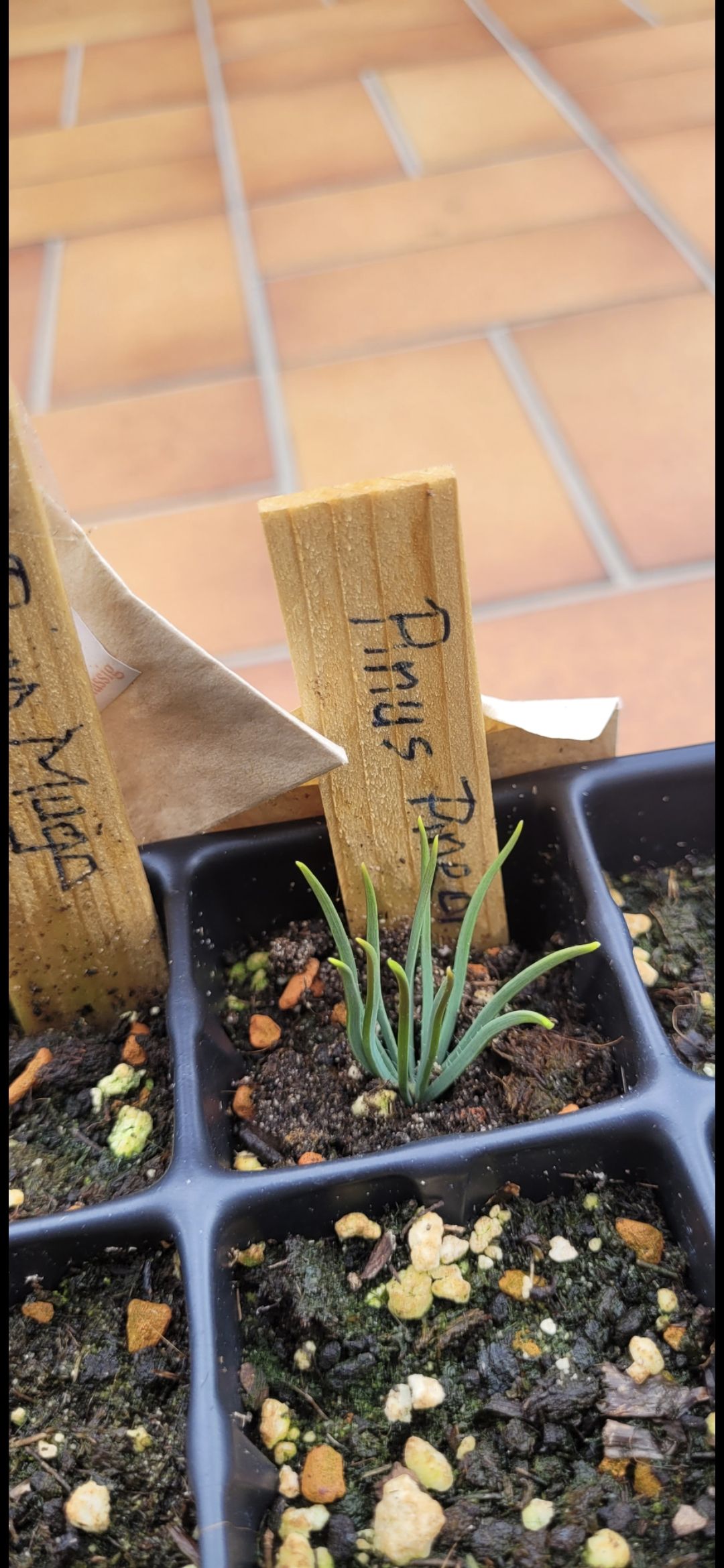
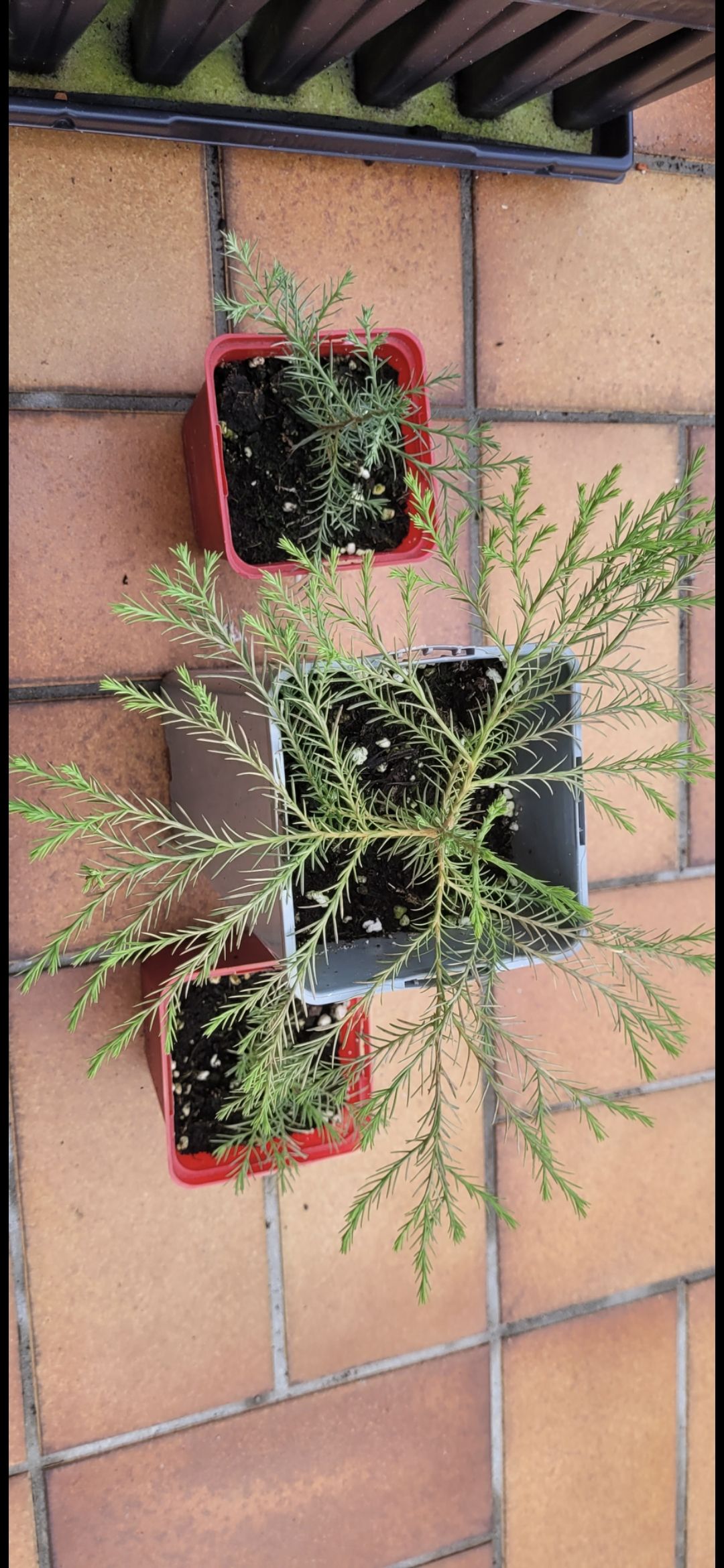
The next trees are already growing: in seed trays and pots, the next generation is sprouting – from pine to fruit tree, hand-labelled, pricked out, repotted. They are the foundation for coming planting projects, above all a food forest in Luxembourg: a multi-layered, edible ecosystem of trees, shrubs and perennials, designed for the greatest possible diversity of varieties and species. At the same time, the food forest is a field trial on the question every tree owner now asks: which species are truly up to today's climate with its long dry spells? What proves itself there flows directly into my planting recommendations. The project is in preparation – if you have land, seed or the urge to join in, feel free to get in touch.